15 Jul 2026
Integrating Biomechanical Insights and Team Dynamics in Cross-Discipline Betting Strategies
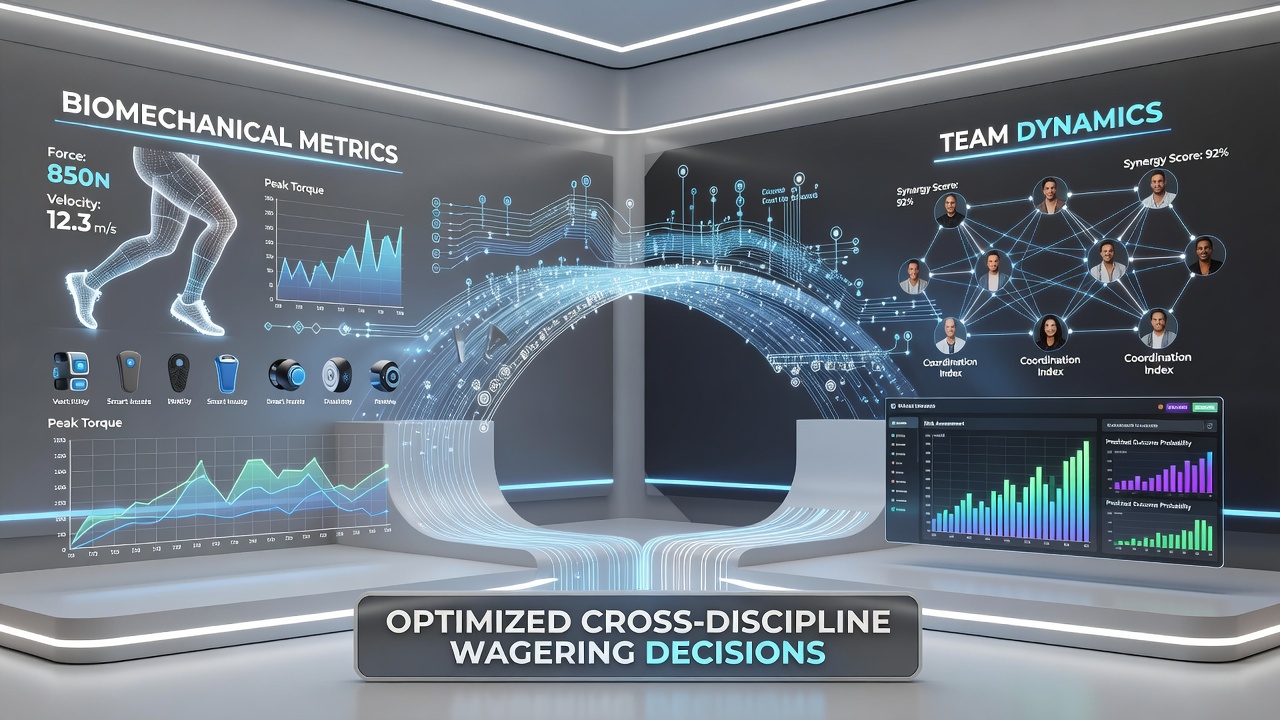
Biomechanical metrics capture precise measurements of movement efficiency, force production, and joint loading while team dynamics reflect patterns of coordination, communication speed, and role adaptability within groups. Researchers combine these data streams to generate predictive models that inform wagering decisions across football, basketball, and equestrian events where performance variables intersect with collective behaviors.
Defining Core Biomechanical Variables
Modern tracking systems record stride length, ground reaction forces, and angular velocities during competition, and these outputs correlate with injury probability and output consistency according to longitudinal studies published by sports science institutes. Analysts apply machine learning algorithms to isolate thresholds where reduced knee flexion or asymmetric hip rotation signals elevated fatigue risk, and such indicators appear in datasets from professional leagues monitored by the Canadian Centre for Ethics in Sport.
Equipment such as inertial measurement units and force plates supplies continuous streams that update in real time, allowing models to adjust probability estimates for player availability within minutes of observed changes. European research consortia have demonstrated that integrating these variables improves forecast accuracy for match outcomes by 8 to 12 percent when compared against traditional statistical baselines.
Mapping Team Dynamics to Performance Outcomes
Team dynamics encompass passing network density, defensive shape recovery time, and verbal cue frequency that observers quantify through video annotation and wearable communication logs. Studies from Australian sports universities show that squads maintaining above-average connectivity scores sustain higher scoring rates even when individual biomechanical outputs decline slightly, and this resilience factor influences live betting markets during extended play periods.
Cohesion metrics derived from GPS positioning data reveal clusters of players who maintain optimal spacing under pressure, and these spatial patterns predict turnover rates more reliably than isolated speed measurements alone. Organizations tracking these interactions report that teams with stable leadership hierarchies exhibit lower variance in second-half performance, a detail that shapes accumulator construction across multiple fixtures.
Combining Data Streams for Multi-Sport Applications
Cross-discipline wagering requires alignment of biomechanical and dynamic variables from disparate sports, and platforms now merge football player load indices with equine gait analysis from racing circuits. A joint project released in July 2026 by an international biomechanics consortium illustrated how normalized force asymmetry scores from both human athletes and thoroughbreds can calibrate expected value calculations when forming doubles or trebles that span codes.
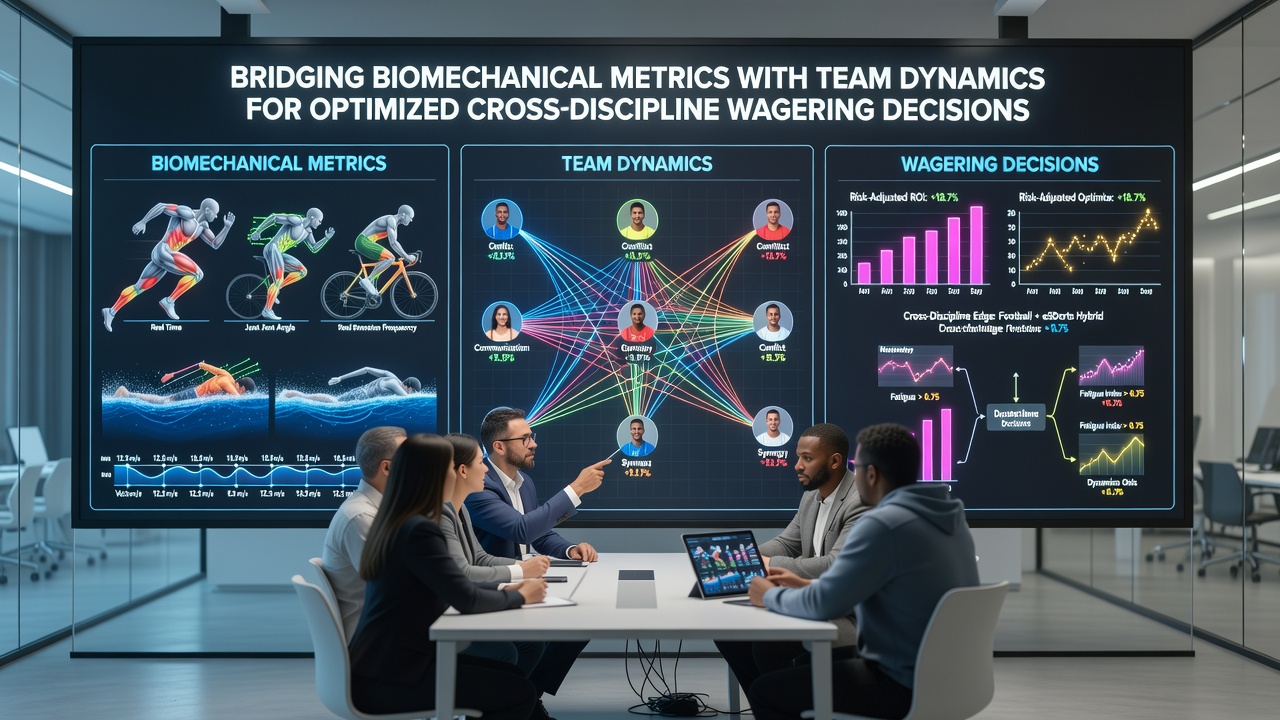
Practitioners normalize outputs across species and environments by converting raw values into z-scores relative to sport-specific populations, and this standardization enables direct comparison of fatigue indicators whether evaluating a midfielder's high-speed running or a horse's stride frequency in the final furlong. Resulting models feed into decision trees that flag favorable odds discrepancies when one dataset signals stability while another shows emerging vulnerability.
Implementation in Live Market Contexts
Operators feed combined metrics into algorithmic engines that refresh odds during matches and races, and bettors access simplified interfaces displaying composite risk scores derived from both movement quality and group synchronization. Data from the National Collegiate Athletic Association performance labs indicate that models incorporating both layers reduce exposure to late swings compared with single-source approaches, because collective adjustments often compensate for individual mechanical decline.
Scenarios involving substitution patterns or pace changes demonstrate clearest advantages, since biomechanical alerts precede visible performance drops while team dynamic shifts reveal tactical responses that bookmakers may underweight. Observers note that successful integration demands regular recalibration against outcome databases to maintain alignment between predicted and realized probabilities.
Regulatory and Ethical Considerations
Gaming authorities in multiple jurisdictions require transparency around data sources used for customer tools, and the Victorian Commission for Gambling and Liquor Regulation has issued guidance on acceptable use of athlete monitoring information in promotional materials. Compliance frameworks emphasize that models must avoid implying guaranteed results while still presenting verifiable statistical relationships between measured variables and historical results.
Industry associations recommend periodic third-party audits of algorithmic fairness, and such reviews confirm that biomechanical and dynamic inputs do not introduce unintended biases when applied across demographic groups or competition levels. These safeguards support continued development of integrated systems without compromising participant welfare standards.
Conclusion
Integration of biomechanical metrics with team dynamics supplies a layered evidence base that refines probability estimates for cross-discipline wagering, and ongoing data collection from July 2026 initiatives continues to expand the precision of these combined models. Organizations that maintain rigorous validation protocols position themselves to deliver tools reflecting observable performance patterns rather than isolated indicators.